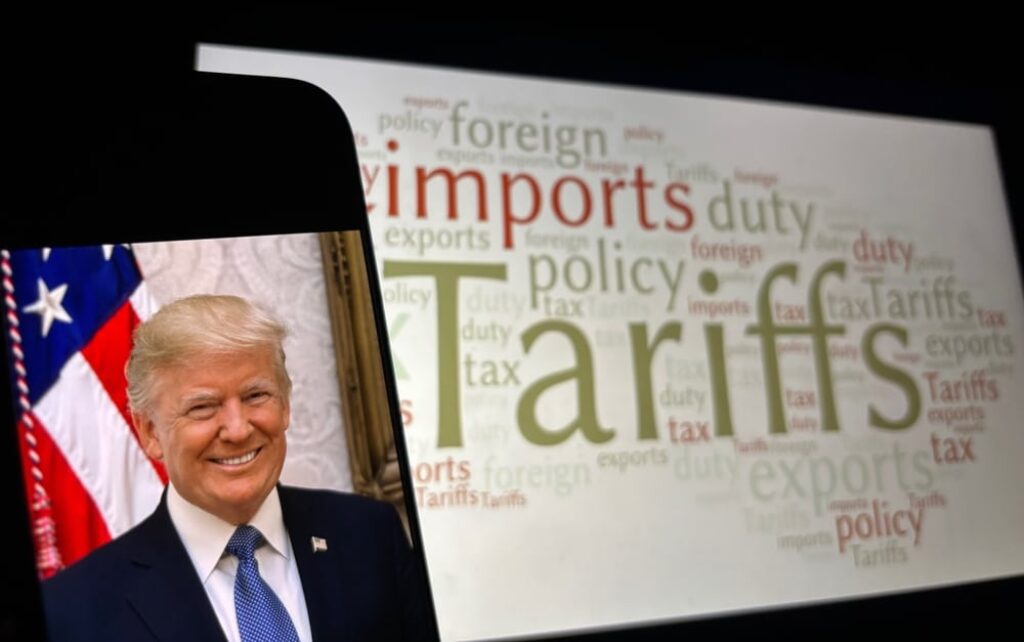

Global stock markets are still turbulent after US President Donald Trump announced a range of tariffs on so-called ‘Liberation Day’ on Wednesday (2 April).
The new taxes have sparked fears of a trade war and global recession. But it’s not only stock markets that will be affected by this economic shock – it could impact personal wealth too.
Jason Hollands, managing director at wealth management firm Evelyn Partners, said: “Higher friction costs on trade are ultimately bad for everyone, even countries like the UK that got off relatively lightly, as this upending of the global trade system will slow growth, possibly trigger recessions and ultimately raise costs for consumers, not least in the US itself.
“President Trump may have some legitimate grievances about the global economic order that has existed for nearly half a century and resulted in unbalanced trade for the US, but at least in the near term this will prove an act of self-harm as the costs of imports rise both directly and for US firms that use imported components.”
Interest rates and mortgages
The Bank of England will face a dilemma when it comes to interest rates. On the one hand, tariffs are going to lift the prices of some goods and its core remit is to keep inflation as close to 2% as possible. This would point to rates staying higher for longer than previously expected. On the other hand, the Bank of England will want to stop the economy from sinking into recession. Therefore, we could see interest rates come down, as they did during the pandemic.

Click here to view our Sponsored Content Hub
Sarah Coles, head of personal finance at Hargreaves Lansdown, said: “The uncertainty means that if you have a remortgage looming, it’s well worth shopping around for a deal as early as possible. If rates rise between now and when you need to remortgage, you’ll have locked in a cheaper deal, and if they fall, you can track down something more competitive.”
Prices and inflation
It seems certain that the US will see marked price rises, but how far these tariffs will raise prices in the UK and Europe depends in part on whether there is any retaliation.
Prime Minister Keir Starmer is currently giving out a very calm message, but if the UK Government feels forced into eventually retaliating, then UK consumers could see prices rise in some areas.
Hollands said: “However, even without direct retaliation it seems very probable that all nations will see prices rise as generalised tariffs such as these will restrict global free trade, distort supply lines, and raise the prices of parts and components that cross several borders.
“In a similar but less significant way to what occurred during the pandemic, it is likely that UK firms will see less choice and higher prices in goods… that they source from overseas.’
Pensions and investments
Whether investments are held in pensions, ISAs or elsewhere, the key is not to panic. We see time and again that economic shocks hit stock markets in the short term, but that in the medium to long term, they recover.
Hollands said: “It is easy to think about selling or switching to ‘safer’ assets when you see your portfolio go into the red, but that is usually not the best policy. Amid uncertainty and periods of turbulence, sometimes the best course of action is to take a few deep breaths, sit tight and wait for the dust to settle rather than make knee-jerk decisions.
“A portfolio that was already well positioned ahead of this would include gold, some value stocks in more defensive sectors and Government bonds, and would be having less of a rollercoaster ride than one devoted to growth stocks. That’s the case for always consistently having a well-diversified portfolio, rather than trying to cobble one together in haste when markets are very volatile and may well remain so over the coming days.”
Defined benefit pensions should be largely unaffected as their payouts are mostly fixed and guaranteed, but movements in interest rates can affect their transfer value, with higher rates generally meaning someone will be offered a lower sum to transfer out.
Hollands added: “For those with defined contribution pension pots, which includes most private sector workplace pensions, as long as they are not close to retirement the impact is hopefully muted, as they do not need to access their funds.”